Ethereum / Smart Contracts
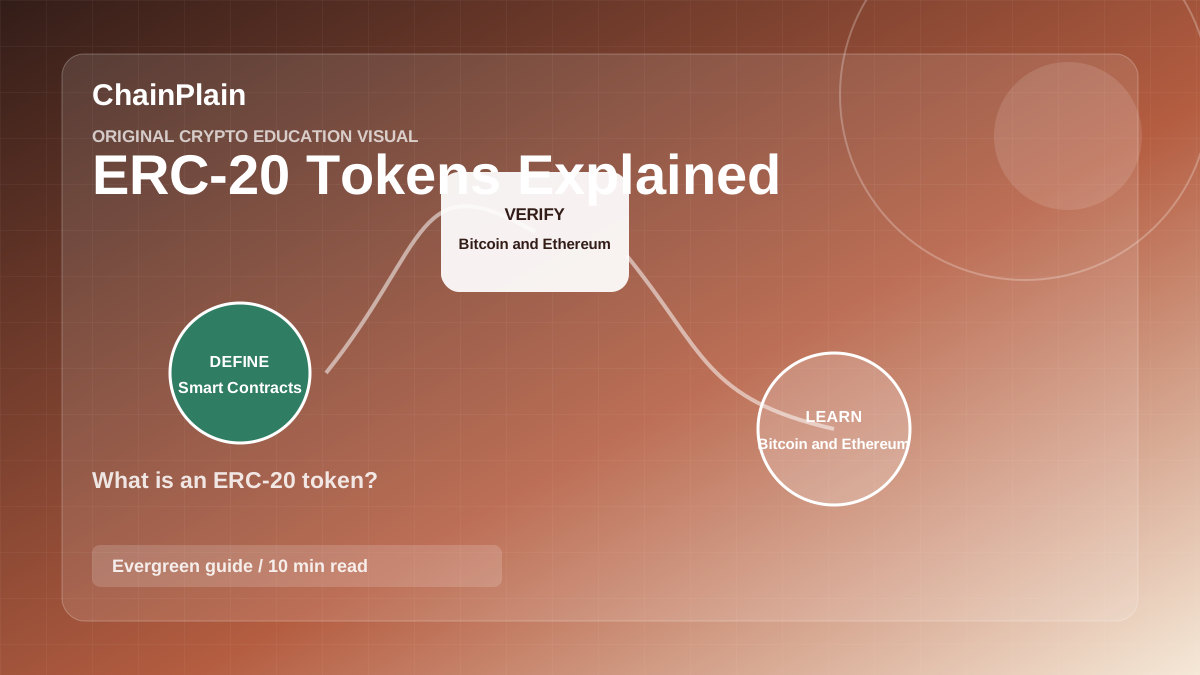
ERC-20 Tokens Explained
ERC-20 is a common token standard for fungible tokens. It helps wallets and applications recognize balances, transfers, and approvals.
Learning collection
Learning path
Core question
What is an ERC-20 token?
ERC-20 tokens: Plain-Language Definition
An ERC-20 token is a fungible token contract that follows a widely used Ethereum interface. Each unit of the token is generally interchangeable with another unit of the same token.
Why ERC-20 tokens Matters
ERC-20 tokens matter because they are used across stablecoins, governance tokens, DeFi applications, wrapped assets, and many experimental projects. The standard is technical compatibility, not a safety rating.
Understanding ERC-20 tokens in Practice
- ERC-20 tokens track balances inside smart contracts.
- Transfers update token balances under contract rules.
- Approvals let contracts spend tokens within permitted limits.
- Compatible wallets can display many ERC-20 balances.
- ERC-20 tokens should be evaluated through custody, verification, costs, permissions, incentives, and failure points.
Examples of ERC-20 tokens
A stablecoin may use an ERC-20 contract on Ethereum.
A decentralized exchange asks for an ERC-20 approval before a swap.
A spam token appears in a wallet because anyone can send tokens to a public address.
Common Misunderstandings About ERC-20 tokens
- ERC-20 tokens are not automatically safe because they use crypto terminology.
- A simple interface for ERC-20 tokens does not remove the need to understand the transaction, permission, or source behind it.
- Popularity, exchange listings, or social attention do not prove that ERC-20 tokens are suitable for every reader.
Risks and Limitations of ERC-20 tokens
- Approvals can be abused by malicious contracts.
- Token contracts can include permissions or controls users do not expect.
- A token following ERC-20 does not prove liquidity or legitimacy.
- Users can send tokens on networks that a recipient does not support.
How to Verify Claims About ERC-20 tokens
- Read primary documentation before relying on summaries about ERC-20 tokens.
- When learning about ERC-20 tokens, start with small test actions if a wallet, network, or protocol flow is involved.
- Keep records of transactions, addresses, dates, fees, and source links relevant to ERC-20 tokens.
- Pause before acting when a prompt, headline, or message about ERC-20 tokens creates urgency.
Key Takeaways About ERC-20 tokens
- ERC-20 tokens are best understood as mechanisms with assumptions and tradeoffs.
- Clear definitions, primary sources, and risk context make research into ERC-20 tokens safer.
- Understanding ERC-20 tokens should remain separate from personal financial decisions.
FAQ
What does ERC-20 tokens mean?
An ERC-20 token is a fungible token contract that follows a widely used Ethereum interface. Each unit of the token is generally interchangeable with another unit of the same token.
Why is ERC-20 tokens important?
ERC-20 tokens matter because they are used across stablecoins, governance tokens, DeFi applications, wrapped assets, and many experimental projects. The standard is technical compatibility, not a safety rating.
What should readers verify about ERC-20 tokens?
Approvals can be abused by malicious contracts. ERC-20 tokens track balances inside smart contracts.
Sources and Further Reading
These links are starting points for independent verification. They do not represent endorsements of any asset, product, or service.
Update History
ChainPlain updates evergreen guides when source material, terminology, risk context, or reader needs change. Updates do not represent investment, legal, or tax advice.
- : Initial educational guide published.
Editorial accountability
Publisher self-review disclosed
The writer, reviewer, and editor are the same person. This page does not claim independent expert review. Sources and update notes are provided so readers can verify the material directly.
Related Articles
Smart Contract Audits Explained
Smart contract audits review code for vulnerabilities and design issues, but an audit is one signal, not a guarantee that a protocol is safe.
Smart Contracts
Token Standards Explained
Token standards define common rules that wallets and applications can understand. They improve compatibility but do not prove that a token is valuable or safe.
Smart Contracts
Blockchain Oracles Explained
Blockchain oracles provide external data to smart contracts. They can be useful, but they introduce trust and data-quality assumptions.
Smart Contracts